
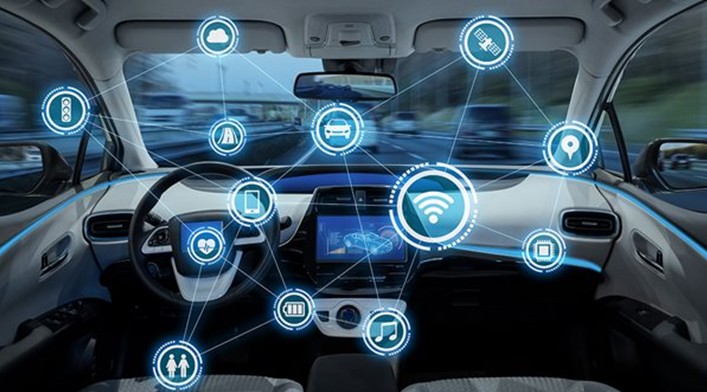
The aim of this Thesis is to investigate driving behavior through the analysis of data collected from connected vehicles. For the purposes of this research, variables related to speed, engine temperature, the anti-lock braking system (ABS), and other driving characteristics were examined. These data were collected over a three-month period to identify different route profiles in terms of driver behavior. The K-Means clustering method was applied to distinguish patterns of driving behavior, and it was found that the classification of trips into three groups provided a satisfactory analytical results. Following, the Random Forest algorithm was applied, using the anti-lock braking system as the dependent variable, with the aim of determining the importance of the independent variables. From the application of the algorithm, it was found that the variable with the highest importance value was the engine oil temperature. Finally, a Binary Logistic Regression was performed to examine the extent to which the independent variables influence the probability of ABS activation, which showed that the variable with the greatest influence was engine activation.
| ID | ad177 |
| Presentation | |
| Full Text | |
| Tags |