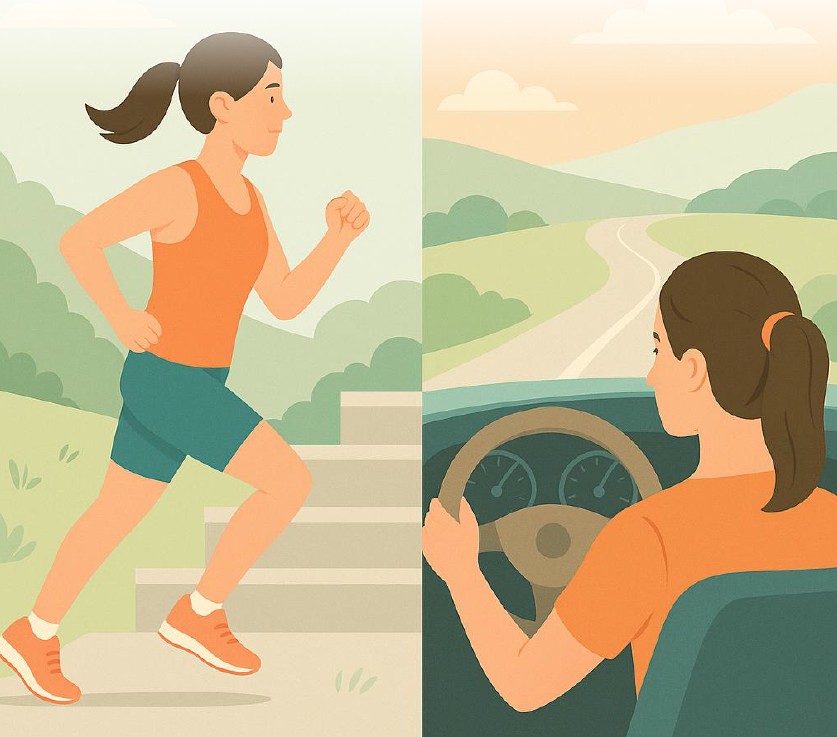
A NTUA Diploma Thesis titled “The impact of physical fitness on road safety and driver behaviour on rural roads” was recently presented by Marina Karachalia. An experimental procedure involving 46 participants aged 19–27 was conducted. The participants were evaluated in terms of their cardiorespiratory fitness through the Maximal Oxygen Uptake index (VO₂max) and their self-reported fitness habits and they were classified into two groups: high fitness and low fitness. The data was analyzed using linear and logistic regression models. Results suggest that high-fitness drivers have longer reaction times, greater variability in headway distance, higher average speeds, and, conversely, a lower probability of road accident involvement. Overall, higher physical fitness appears to be associated with more stable and controlled driving behavior, which, despite the increased reaction time, may contribute to reduced accident risk through improved decision-making.