Month: January 2026

The International Traffic Safety Data and Analysis Group (IRTAD) of the International Transport Forum (ITF/OECD), the National Technical University of Athens (NTUA) and the Hellenic Institute of Transportation Engineers (HITE) are co-organizing the 8th IRTAD International Conference: Better Road Safety Data for Better Safety Performance which will be held in Athens, Greece, on 15-17 April 2026, with the support of FERSI and ECTRI, under the auspices of the Ministry of Infrastructure and Transport. The objectives of the Conference are to discuss improvements in the quality of data systems and data analysis globally, by fostering knowledge transfer among participants, with particular emphasis on road safety performance. The Conference is open to all and is primarily for the attention of road safety researchers, data analysts, those involved in collecting safety data and developing databases, and all those using the results of research to advise decision makers on road safety matters. Participants can register here. Draft Programme can be found here. 
The NTUA research team will contribute actively with 13 presentations.

The European Road Transport Research Advisory Council (ERTRAC) has published a Position Paper titled “Road Transport Research in Horizon Europe Follow-up”. ERTRAC and the Associations supporting this Position Paper are convinced that dedicated funding for Road Transport Research is necessary to address the systemic road transport research needs critical to improve the efficiency, sustainability, safety and resilience of the whole European mobility system. Furthermore, it highlights the need for continued investment in vehicle technologies, infrastructure, traffic management, automation, and connectivity, as well as strong public–private cooperation, which are critical for delivering safer, cleaner, and more efficient road transport systems. 

Marios Sekadakis has successfully defended his PhD dissertation titled: “Safety Assessment and Behaviour Modelling of Take-Over Dynamics in Automated Driving: From Human Response to Network-Level Simulation”, under the supervision of NTUA Prof. George Yannis. This PhD developed an integrated framework to explain how take-over response, driving performance and safety in automated driving at SAE Levels 2 and 3 are shaped by transition context, driver state, interface design and vehicle state dynamics. By combining systematic review and meta-analysis, simulator experimentation, data-driven modelling, behavioural profiling and network-level traffic simulation, the dissertation examined the full chain from individual re-engagement behaviour to vehicle motion and mixed-traffic safety effects. This work demonstrates that safety during take-over transitions cannot be explained by take-over duration alone. It demonstrates how Human-Machine Interface (HMI) design, automation level, behavioural variability and roadway context interact to shape both vehicle-level and network-level safety, identifying where and why safety margins collapse during transitions. The findings provide a consistent evidence base for safer take-over management and more robust evaluation of future automated driving systems. 

Maria Oikonomou has successfully defended her PhD thesis titled “Multilevel crash risk assessment under autonomous vehicle integration: From partial to full autonomy through urban traffic simulation”, under the supervision of NTUA Prof. George Yannis. The thesis develops a validated, simulation-based framework for estimating crash risk during the transition from partial to full Autonomous Vehicle (AV) deployment. A systematic review establishes an evidence-based repository of AV behavioural parameters to support traffic microsimulation. The methodology integrates conflict-based Surrogate Safety Measures and a novel Time-To-Collision-based conflict-to-crash-risk conversion procedure, validated through k-means clustering against observed crash patterns. Applied to a high-fidelity simulation model of central Athens, the framework evaluates fifteen AV deployment scenarios across varying penetration levels. The multilevel assessment includes road-level modelling with XGBoost and SHAP to quantify the influence of traffic, infrastructure and automation, and conflict-level spatial analysis using the Getis-Ord Gi* statistic and a binomial GAM to detect high-risk hotspots. Results reveal that crash risk initially increases in mixed-traffic conditions before decreasing as automated behaviour becomes dominant and stabilises network interactions.
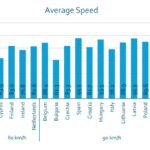
The European Commission has recently published findings from Trendline project on key road safety performance indicators (KPIs), revealing significant gaps in compliance with basic safety measures across EU Member States. This data paints a troubling picture of speeding compliance, particularly in urban environments. In many countries, compliance falls below 50% on city roads—precisely where pedestrians, cyclists, and other vulnerable road users are most at risk. Furthermore, while driver seat-belt use shows strong compliance, often exceeding 95% on motorways, rear-seat belt use tells a different story. Moreover, although the data shows high overall compliance with alcohol limits, at approximately 98, the seemingly small 2% non-compliance rate translates to roughly five million impaired drivers on EU roads. These indicators support road safety strategies and monitoring efforts at both national and European levels as the EU works toward its 2030 road safety targets.

The Cracow University of Technology together with EWGT are organizing the 28th Euro Working Group on Transportation Conference (EWGT 2026) which will take place in Krakow, Poland on 2-4 September 2026. EWGT is a premier international forum for researchers, practitioners, and policymakers in the field of transportation and logistics. This event will bring together researchers and practitioners to advance the application of operations research methods, mathematical and statistical models, and computational algorithms in transport analysis, planning, and operations. Researches can submit their abstracts until 15 March 2026.

The 2025 infographic of NTUA Road Safety Observatory (www.nrso.ntua.gr) highlights one more very intensive and highly fruitful year. The nrso scientific team with high dedication, efficiency and expertise continues to grow and excel, being active in 30 innovative research projects, succeeded to publish 103 scientific papers (32 in peer reviewed journals) – our best performance ever, and travelled around the world in hundreds of meetings to further develop and promote road safety science. We persist with passion for evidence based decisions towards a new culture of calm and safe roads everywhere and for all.


The European Association of Operators of Toll Road Infrastructures (ASECAP) is organizing the ASECAP Days 2026 which will take place in Bratislava, Slovakia on 27-29 May 2026. This Conference will focus on key challenges and developments shaping the future of toll road infrastructure and motorway operations. More than 80 high-level speakers will share knowledge experiences. Registration is open.

The International Transport Forum (ITF) is organizing the ITF 2026 Summit which will take place in Leipzig, Germany, on 6-8 May 2026, under the broad thematic framework “Fostering Resilient and Inclusive Net-zero Transport”. The ITF Annual Summit is the world’s largest gathering of transport ministers and the premier global transport policy event. Since 2008, ministers from ITF’s 69 member countries, heads of international organisations, parliamentarians, and leaders in industry and academia have met annually during the event. Programme can be found here.

The International Cooperation on Theories and Concepts in Traffic safety (ICTCT) in cooperation with FPZ are organizing the 38th ICTCT Conference which will take place in Zagreb, Croatia, on 22-23 October 2026. The objective of this Conference is to support the understanding and the execution of suitable approaches to move towards a transportation system without severely injured or killed road users. This year’s theme is “Road Safety in the Age of AI: Innovations, Challenges, and Opportunities,” focusing on the role of artificial intelligence in traffic safety. Researchers can submit their work until 10 April 2026.

The Association for European Transport is organizing the 54th European Transport Conference which will take place in Porto, Portugal on 9-11 September 2026. This Conference provides an excellent opportunity for sharing, learning, inspiring and network building, crossing all stages of transport planning from analyses to delivery and all transport modes. The conference attracts transport policy makers, practitioners and researchers from all over Europe and beyond, and encourages participation from professionals of all levels of experience.

The Transportation Research Board (TRB) organized with great success the 105th Annual Meeting, which was held in Washington DC, on 11-15 January 2026. The meeting program covered all transportation modes, addressing topics of interest to policy makers, administrators, practitioners, researchers, and representatives of government, industry, and academic institutions. More than 650 workshops and sessions took place, with over 4.000 presentations. NTUA actively contributed with the following road safety papers and presentations:
NTUA actively contributed with the following road safety papers and presentations:
- Evaluating the Long-Term Effects of Telematics Driver Feedback on Speeding Behavior: A Survival Analysis Approach
- Improving driver safety tolerance zone through holistic analysis of road, vehicle and behavioural risk factors: A Comparison using driving simulator and naturalistic data
- Two-Stage Optimization Framework for Traffic Anomaly Detection Based on Vision-Language Models
- Unsupervised Detection of Harsh Cornering Behavior Using Smartphone based Telematics and Infrastructure Data
- Cooperative, Connected and Automated Mobility Policy Support Tools

Vehicles Journal has recently launched the 2nd Edition of the Special Issue titled: “Emerging Solutions and Technologies for Smart Mobility and Vehicle Safety in Transportation” aiming to present cutting-edge research on novel solutions and technological advancements in smart mobility, transportation safety, and intelligent vehicle systems. The manuscript submission deadline is until 25 December 2026.
This Special Issue welcomes contributions that explore data-driven approaches to traffic management, machine learning applications for driver behaviour analysis, crash prediction and prevention strategies, automation in transportation systems, and the role of connected and autonomous vehicles (CAVs) in improving road safety.
Guest editors of this special issue from NTUA are: Dr. Eva Michelaraki and Prof. George Yannis.

The European Association of Operators of Toll Road Infrastructures (ASECAP) together with ASFA organized with great success the 18th ASECAP Road Safety Conference which was held in Chambéry, France on 9 March 2026 in the framework of the 17th World Congress on Road Winter Service, Resilience and Decarbonisation. This year’s theme was “Building & Managing the Resilient Motorways of Tomorrow: Intelligent, Safe, Secure and Human-Centered“. The Conference provided a high-level platform for discussion on innovative approaches, technologies and policies aimed at improving safety on road networks, with a particular focus on operational experience and concrete solutions.