Author: Ioannis Papadogiorgakis
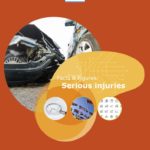
The European Commission with the active contribution of NTUA, SWOV and KFV has published at the European Road Safety Observatory, the Serious Injuries Facts and Figures Report which looks at serious injuries resulting from road crashes in EU and EFTA countries. According to this Report, the police-based data indicates an average decrease of 19% in serious injuries over the decade 2013-2023, as well as average around 8 serious injuries for every road fatality on EU roads (France and Italy excluded among others). Moreover, vulnerable road users (pedestrians, cyclists, moped riders and motorcyclists) make up a large share of serious injuries (57% EU average), with most of the serious injuries in the EU occurring on urban roads, accounting for 57%, half of which are pedestrians. This compares with 48% of fatalities. 


This year we followed our dreams with passion, system and stamina, promoting intensively road safety scientific excellence and safer mobility everywhere and for all. At mid-way to the decade target of -50% road fatalities, we need to further strengthen our individual and collective efforts to sincerely include traffic safety into the mobility agenda and persist in implementing the vision zero traffic fatalities.
We thank you all for the excellent cooperation and we are sending you our very best wishes for Merry Christmas and a Very Lucky New Year, full of personal and professional achievements.


The Hellenic Institute of Customer Service has recently honored NTUA and Global Link, recognizing their excellence in customer experience and responsible service practices. The awards received concerned Best Mobile Customer Experience and Best Organisation for ESG Factors & Practices in Customer Service for the development of the SmartMaps Digital Platform. The SmartMaps Platform combines data from mobile phone sensors and through machine learning algorithms enables users to select safer and more environmentally friendly routes, while improving overall traffic efficiency. These distinctions highlight the value of applying innovative digital solutions to address key social and environmental challenges and reflect the impact of collaboration between academia and industry in delivering customer-centric and sustainable services.

The European Road Safety Charter of the European Commission, has recently published a new Article focusing on driving under the influence of alcohol or drugs, which remains one of the leading causes of road crashes. Despite longstanding legislation and enforcement efforts, an estimated 25% of EU road fatalities are alcohol-related, and drug impairment is an increasing concern in fatal collisions. Addressing driving under the influence requires an integrated, multi-measure approach, combining strong health policies to reduce alcohol consumption, lower legal BAC limits, visible and consistent enforcement, and targeted road safety campaigns to shift social norms and promote alternative transport options.

The Horizon Europe research project IMPROVA has recently released its 3rd Newsletter, focusing on enhancing road safety by addressing the complexities of long-term consequences (LTC) caused by road traffic crashes. This version of the Newsletter mainly focuses on this year’s 1st IMPROVA PANEL where the IMPROVA partners, each representing a crucial part of the consortium (academy, research, medical, and industry), presented an overview of what has happened in the project since it started. Moreover in 2025, IMPROVA strengthened its presence in the international road safety research community, presenting its findings and research approach at several key conferences and expert meetings in Europe and Asia. In total, IMPROVA participated in 11 industry events, conferences and stakeholder meetings globally.
The Horizon Europe research project CulturalRoad has recently launched a Survey to gather perspectives and better understand users’ priorities. The Project is working on new methodologies that integrate cultural and geographical diversity into Cooperative, Connected and Automated Mobility (CCAM) deployment plans, with the aim of ensuring that CCAM improves mobility for everyone. The questionnaire covers physical limitations, digital accessibility, safety measures, and other ethical considerations related to mobility in general, and CCAM in particular. No prior knowledge is required to participate – everyone’s experience is valuable. The Survey takes from 5 to 30 minutes to answer and participation is possible either anonymously or by name. Take part in the Survey here.

The Hellenic Ministry of Infrastructure and Transport recently launched a road safety campaign, to draw public attention on the safety of Greek drivers with focus on the risk caused to other’s lives. This Campaign aims to reduce serious traffic crashes and fatalities and save all road users lives, boosting road safety awareness and respect to other road users and the new Road Traffic Code. 

A paper titled Incentive-Based Telematics and Driver Safety: Insights from a Naturalistic Study of Behavioral Change authored by Armira Kontaxi, Harris Sideris, Dimitrios Oikonomopoulos and George Yannis has been published in Sensors. This paper investigates driver profiling and behavioral change using high-resolution telematics data collected through the OSeven DrivingStar smartphone application. The naturalistic driving experiment was divided into two main phases: a baseline period with personalized feedback (Phase A) and an incentive-based phase (Phase B) comprising two gamified driving challenges with distinct reward criteria. The analysis of K-means clustering identified three driver profiles — Low-Exposure Cautious, Balanced/Average, and High-Risk Drivers — based on exposure, harsh events, speeding, and mobile phone use. The findings indicate that the Balanced/Average group exhibited statistically significant improvements during both challenges, reducing speeding frequency and intensity, while High-Risk Drivers achieved moderate reductions in speeding intensity. Furthermore, this Study contributes to the growing body of research on gamified driver feedback by linking behavioral clustering with responsiveness to incentives, providing a foundation for adaptive and personalized road safety interventions. 
The Horizon 2020 research project PHOEBE has recently released the PHOEBE 6th Newsletter, which provides information on the latest outcomes of the EU-funded ‘Predictive Approaches for Safer Urban Environment’ (PHOEBE) project aiming to increase the road safety of vulnerable road users, especially those who use active mobility and e-scooters. PHOEBE partners are strengthening their collaboration beyond the project framework, supported by initiatives such as the official accreditation of The Floow as an AiRAP Attribute Supplier.

The International Road Federation (IRF Global) organized with great success the IRF Global R2T Conference which was held in Los Angeles, USA on 9-12 December 2025. This year’s Theme was “Transforming Roadways: Smarter, Safer & More Sustainable“. This Event offered a dynamic platform for learning, collaboration, and forging influential partnerships—ensuring you stay at the forefront of a rapidly changing industry. NTUA actively contributed with the following presentation:
NTUA actively contributed with the following presentation:
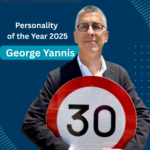
The International Road Federation (IRF) has honoured Professor George Yannis with the IRF Personality of the Year Award 2025, recognising his exceptional leadership, scientific contribution and global impact in advancing road safety and sustainable mobility. His academic influence is reflected in a remarkable publication record of over 1,000 scientific papers, widely cited around the world, and contribution in more than 350 research and engineering projects. Beyond academia and institutional leadership, Professor Yannis has also demonstrated an inspiring personal commitment to safer cities. In November 2024, he completed an extraordinary challenge: running 30 Marathons in 30 months to promote the adoption of city-wide 30 km/h speed limits. By awarding Professor Yannis the Personality of the Year 2025, the IRF celebrates not only a distinguished professional career, but a lifelong dedication to making mobility safer for all, through science, advocacy and personal action.

The European Transport Safety Council (ETSC) has published the 49th PIN Flash Report titled “Tapping the potential for reducing work-related road deaths and injuries“. This Report examines how governments, Authorities and employers are addressing the issue of work-related road deaths, identifies examples of good practice and highlights remaining gaps. Specifically, data from 16 European countries show that work-related road deaths account for 30-40% of all road deaths, but the official numbers are distorted by inconsistent reporting, missing data and incompatible national definitions. The findings underscore the need for closer alignment between road safety and Occupational Safety and Health (OSH) systems, stronger data integration and clearer accountability for road risk management at every level.

A global coalition of partners announced their commitment to the Implementation of the United Nations Decade of Sustainable Transport 2026-2035, to accelerate the transition towards inclusive, safe, green and efficient road systems for all. More precisely, IRF, Arup, NTRO, Global Alliance of NGOs for Road Safety, FIDIC, iRAP, ORIS and World Wildlife Fund joined forces to translate the vision of the Decade into concrete action by providing strategic direction and practical support for those who plan, build and manage road systems. At its core stands the Roadmaps for Change series will outline policy actions, technical standards and tools, replicable practices, innovation and indicators of progress, together with a capacity-building programme for trainings and peer-learning activities, with a special focus on road and transport public Authorities.

A paper titled State-of-the-art review on sustainable driving behavior: trade-offs between road safety, fuel consumption and emissions authored by Virginia Petraki, Apostolos Ziakopoulos and George Yannis has been published in Accident Analysis & Prevention. This paper aims to systematically review the role of driving behavior, as expressed by road crashes, fuel consumption, and vehicular emissions. A two-stage PRISMA approach was developed to shortlist the most relevant studies for systematic review out of 1,120 initial studies, with each stage focused on safety and eco-driving behavior studies. The findings suggest that the main driver behavior factors found to affect both road crashes and fuel consumption/emissions are related to average and instantaneous driving speed and acceleration, harsh acceleration and deceleration events, driving volatility, vehicular jerk, and idling during driving. Furthermore, a discussion of the knowledge gaps in the potential of an integrated methodological framework of driving behavior assessment in the context of road safety, economy, and environmental sustainability is then provided, followed by the relevant conclusions.

Dimitris Nikolaou, Eva Michelaraki, Maria G. Oikonomou, Marios Sekadakis and Stella Roussou, Research Associates of the Department of Transportation Planning and Engineering of NTUA were awarded with the NTUA Thomaidion Award for outstanding road safety publications in scientific journals. The Awards for publications in Scientific Journals concerned:
- Nikolaou D., Ziakopoulos A., Kontaxi A., Theofilatos A., Yannis G., (2024) “Spatial analysis of telematics-based surrogate safety measures”, Journal of Safety Research, Vol. 92, pp. 98-108.
- Yannis G., Michelaraki E., (2024) “Review of City-Wide 30 km/h Speed Limit Benefits in Europe”, Sustainability 2024, 16(11).
- Antonakaki A., Oikonomou M. G., Garefalakis T., Yannis G., (2024) “Driving Automation Systems Penetration and Traffic Safety: Implications for Infrastructure Design and Policy”, Infrastructures 2024, 9(12), 234.
- Sekadakis M., Kallidoni M., Katrakazas C., Trösterer S., Marx C., Moertl P., Yannis G., (2024) “The HADRIAN novel human–machine interface prototype for automated driving: safety and impact assessment”, European Transport Research Review 16, 64.
- Roussou S., Petraki V., Deliali K., Kontaxi A., Yannis G., (2024) “Cost benefit analysis of reducing speed limits in Athens to 30 Km/h”, Case Studies on Transport Policy, 18, 101289.
Infrastructures Journal has launched the 2nd Edition of the Special Issue titled: “Safer Roads Ahead: Exploring the Latest Innovations and Advancements in Road Design and Safety Technology, 2nd Edition” aiming to showcase recent developments, innovative methodologies, and emerging technologies that contribute to safer and more resilient road infrastructure. The submission deadline is 31 August 2026.
This Special Issue welcomes contributions on innovative approaches to road safety and infrastructure development. Relevant themes include emerging road design strategies, smart and adaptive roadway systems, and advanced safety solutions for vulnerable road users, as well as data-driven and AI-supported methods for identifying and mitigating crash risks,, and connected and autonomous vehicle technologies. Studies focusing on human factors, behavioural insights, and environmental or climate-resilient road design are likewise encouraged.
Guest editors of this special issue are Dr. Dimitrios Nikolaou and Associate Prof. Panagiotis Papantoniou.
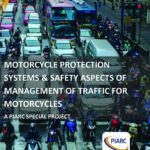
The World Road Association – PIARC recently published a Report titled “Motorcycle Protection Systems & Safety Aspects Of Management Of Traffic For Motorcycles” responding to the need of protecting one of the most vulnerable road user groups worldwide. The purpose of this Report is to provide evidence-based knowledge, case studies, and recommendations that can support PIARC member countries in addressing motorcyclist safety through both infrastructure measures and traffic management strategies. The scope of the Study includes literature reviews, international surveys, stakeholder interviews, and numerical/experimental analyses with emphasis in low- and middle-income countries.

The World Road Association – PIARC recently published a Report titled “Management of Road Worksites”. This Special Project presents a critical and escalating global challenge: the growing safety, mobility, and environmental burden of road worksites. In response to these challenges, PIARC commissioned this Study to investigate current governance models and best practices from around the world. Its purpose was to synthesise these findings, benchmark capability gaps, and ultimately deliver a framework and practical toolkit. The design integrated a systematic literature review, a global survey, semi-structured interviews and a detailed analysis indicating a clear set of strategic actions necessary to mature global practice.
Tongji University – Workshop on Traffic Control Systems for Future Mobility, Shanghai, December 2025

Tongji University organized with great success a Workshop on Traffic Control Systems for Future Mobility which took place in Shanghai, China on 4 December 2025. This Event aims to foster dialogue on road safety within traffic control and mobility developments and interventions. NTUA actively contributed with the following presentation:
A paper titled Evaluating driver preferences between punitive and non-punitive speeding penalties: Results from a stated choice experiment authored by Athanasios Theofilatos, Apostolos Ziakopoulos, Evangelia Stratigi, Pantelis Kopelias and Dimitris Potoglou has been published in Journal of Safety Research. This Paper aims to investigate driver preferences regarding penalties for speeding violations in Greece: (Option A) immediate fines with off-road short detention (administrative process); (Option B) attendance of compulsory road safety seminars; and (Option C) judicial processes with possible dispute of fines in court. Data were collected via a Stated Choice (SC) survey conducted during June and July 2023 in Greece, involving 161 participants resulting in 805 choice situations, and were analyzed by utilizing a random parameter multinomial logit model to capture unobserved heterogeneity among drivers. The results showed that only 4.6% of respondents preferred the judicial process, indicating a strong deterrent effect of potential trial and associated costs. These findings point towards more effective enforcement strategies while balancing penalty costs and duration of compulsory off-road detention and promoting educational-related non-punitive measures.

A paper titled Cross-cultural perspectives of vulnerable road user safety performance based on evidence from 39 countries authored by George Yannis, Apostolos Ziakopoulos, Dimitrios Nikolaou, Konstantinos Kaselouris, Mette Møller, Dagmara Jankowska-Karpa and Marie-Axelle Granié has been published in IATSS Research. This paper aims to provide a quantified update on VRUs safety performance by analyzing data from a broad-country sample. For this study, data was utilized from the third edition of the E-Survey on Road Users’ Attitudes (ESRA3) survey, which was conducted in 2023, covering 39 countries from 5 continents. A statistical analysis based on Self-Organizing Maps (SOMs) and clustering was conducted to meaningfully categorize VRU groups, enabling the quantification of each category and providing scientific documentation for more informed policymaking. Findings include the fact that VRU safety perceptions and behaviors differ significantly across regions, with Europeans feeling safer overall, with older VRUs displaying fewer risky habits than younger ones. Furthermore, for all VRU modes, statistical tests revealed that there is a statistically significant association between younger individuals and higher-risk cluster categorization.

A paper titled Analyzing SHAP values of XGBoost algorithms to understand driving features affecting take-over time from vehicle alert to driver action authored by Marios Sekadakis, Thodoris Garefalakis, Peter Moertl and George Yannis has been published in Displays. This Study investigates the factors influencing Take-Over Time (TOT) during transitions from automated to manual driving, emphasizing the novelty of applying XGBoost modeling combined with SHAP analysis to uncover non-linear and implicit dependencies between features. Driving simulation data were utilized as key variables for the analysis. The findings indicate that higher automation levels resulted in longer TOT, with SHAP values consistently positive for AD Level 3, demonstrating the added value of explainable machine learning in clarifying these patterns. Furthermore, dynamic driving parameters, such as deceleration and speed variability were also significant. Speed showed a moderate positive effect on TOT at 80–110 km/h, with drivers taking additional time to assess the environment, but higher speeds (above 110 km/h) resulted in quicker responses. This study contributes to a deeper understanding of takeover behavior and provides actionable evidence for optimizing adaptive HMI design and takeover strategies in AD systems.

A paper titled In full-touch HMI mode: How does car-following pressure, task complexity, and speed affect driver’s visual distraction characteristics? authored by Kunchen Li, Menglu Gu, Wei Yuan, Yisi Lu and George Yannis has been published in Accident Analysis & Prevention. This paper aims to investigate the effects of interaction tasks and traffic situations on drivers’ visual distraction characteristics in full-touch HMI mode. A total of 50 distinct participants were recruited: 30 took part in a real-road experiment, and 30 participated in a driving simulator experiment, with 10 being in both experiments with a total of 60 participant-sessions. Air volume control, temperature control, and call a contact are selected as typical tasks in each experiment. The results show that the mean off-road glance duration is influenced by the car-following pressure but not by the task. The mean glance duration is lower when the driver is following a vehicle, with an average decrease of 21%. Furthermore, higher speeds lead to a decrease in the total off-road glance duration, where participants tend to reduce the duration of each off-road glance while increasing the number of glances to compensate for the increased risk. The findings can differentiate the visual demands of various HMI tasks and clarify how drivers adapt their gaze behaviors as driving demands change (e.g., car-following pressure), offering safety-related recommendations for drivers.
A paper titled Infrastructure use and related safety feeling of different road user types globally authored by George Yannis, Dimitrios Nikolaou, Konstantinos Kaselouris and Gerald Furian has been published in IATSS Research. The objective of this Paper is to investigate trends in road infrastructure usage and safety perceptions among car drivers and vulnerable road users across different types of roads worldwide. For this study, data from the third edition of the E-Survey on Road Users’ Attitudes (ESRA3), conducted in 2023 and covering 39 countries from 5 continents, were utilized. The results revealed that car drivers in Europe have the highest usage of inter-city motorways, while America leads in using thoroughfares and high-speed roads within cities. Moreover, in Europe, rural roads and roads connecting towns and villages are heavily utilized. Furthermore, moderate to weak linear relationships were discovered between the perceived safety of road infrastructure and road fatality rates, as well as between the perceived safety of road infrastructure and Gross Domestic Product. Lastly, recommendations for enhancing infrastructure safety, such as road maintenance and upgrades, are provided.
The Hellenic Association for the deployment of Intelligent Transport Systems (ITS Hellas) in co-operation with the University of Patras, Department of Civil Engineering are organizing the International Conference ITS 2026 which will be held in Patras, on 12-13 November 2026. This Conference will be held under the theme “Intelligent Green Mobility and Resilience Society”. The ITS Conference is an opportunity for industry, public organizations, local government and authorities, universities, researchers, consultants, constructors and freelancers to exchange views on arising problems and innovative solutions, including policies. Pre-registration is available here.

A NTUA Diploma Thesis titled “Driving Behavior Analysis Using Connected Vehicle Data” was recently presented by Andreas Englezos. For the purposes of this research, variables related to speed, engine temperature, the anti-lock braking system (ABS), and other driving characteristics were examined. The data were collected over a three-month period to identify different route profiles in terms of driver behavior. From the application of the algorithm, it was found that the variable with the highest importance value was the engine oil temperature. Finally, a Binary Logistic Regression was performed to examine the extent to which the independent variables influence the probability of ABS activation, which showed that the variable with the greatest influence was engine activation. 

The International Road Federation (IRF) organized with great success the IRF Annual Conference 2025 which was held online on 2-4 December 2025. The Conference brought together leaders from government, international organisations, academia, industry and civil society, welcoming hundreds of participants from 84 countries across nine online sessions under the theme, “Reimagining Roads for Inclusive, Safe, Green and Efficient Mobility”. It was demonstrated that reimagining roads requires integrating people’s lived mobility realities with technological, institutional and financial transformation, while collaboration across countries and disciplines remains central to addressing shared challenges. Session summaries of the Conference are available here.

The IEEE Intelligent Transportation Systems Society (ITSS) organized with great success the IEEE International Conference on Intelligent Transportation Systems (ITSC 2025), which was held in Gold Coast, Australia on 18-21 November 2025. This annual flagship Conference attracts researchers, engineers, practitioners, and students, from industry, universities and government agencies to present their latest work and to discuss research and applications for intelligent vehicles and vehicle-infrastructure cooperation. NTUA actively contributed with the following presentation:
NTUA actively contributed with the following presentation:
Ayvens Societe Generale Group organized with great success a Webinar on Trends and Developments in Mobility, which took place online on 13 November 2025. This Event, aimed to educate the participants on the developments in the automotive industry, the transition to electrification, the new era of mobility global trends and developments as well as safe mobility and road safety approaches. NTUA actively contributed with the following presentation:
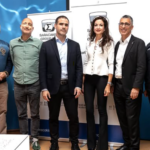
Saracakis Group of Companies in cooperation with NTUA and the Ministry of Infrastructure and Transport organized with great success a Workshop on Safe Driving Behavior Courses, which was held in Athens, on 12 November 2025. This Ιnitiative aimed to educate the participants on safe driving, reduce serious traffic accidents and fatalities and save the lives of young people. National road safety experts and driver safety instructors commented on the issue. NTUA actively contributed with the following presentation:
NTUA actively contributed with the following presentation: