Month: November 2023
The Directorate General for Mobility and Transport (DG Move) of the European Commission released the Statistical Pocketbook 2023 “EU Transport in figures”. In this Statistical Pocketbook, key road safety Tables are contained, together with several other Tables on transport statistics, providing a complete picture of current trends in transport in Europe. Data on road fatalities for the EU member states and associate countries allow for time series comparisons and country rankings. 

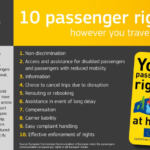
The European Commission adopted a series of proposals designed to improve the experience of passengers and travellers by strengthening their rights. These proposals focuse on stronger passenger rights, protection of package travellers, better multimodal travel information services and the creation of a common European mobility data space. The new rules will also provide for safer and smoother journeys, especially those involving different travel services or transport modes, ensuring that passengers have access to direct support, and enhanced real-time information, for example on delays and cancellations.
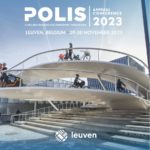
POLIS, the European Cities Network, organised with great success the 2023 Annual Polis Conference, which took place in Leuven, on 29-30 November 2023. The POLIS Annual Conference is Europe’s leading sustainable urban mobility event, providing an opportunity for cities and regions to showcase their transport achievements, including recent safety developments, to a large audience of mobility experts, practitioners, and decision-makers from both the public and private sector. Urban Road Safety is a key conference priority.
A paper titled “Parkinson’s Disease and Driving Fitness: A Systematic Review of the Existing Guidelines” authored by Petros Stamatelos, Alexandra Economou, George Yannis, Leonidas Stefanis and Sokratis G. Papageorgiou has been published in Movement Disorders. Results revealed that neurological aspects of driving fitness evaluation of PD patients are recognized in most of the guidelines. Furthermore, motor, neuropsychological, visual, and sleep assessment and medication review are key components for road safety. 
A paper titled “Cycling under the influence of alcohol and other drugs: An exploratory analysis” authored by Zoi Christoforou, Maria Giannoulaki, Christos Gioldasis and George Yannis, has been published in Transportation Research Part F: Traffic Psychology and Behaviour. Results revealed that Cycling Under the Influence (CUI) of alcohol and other drugs is indeed a common practice among Parisian cyclists, although they declare to be aware of related risks, but rarely adapt their drinking/cycling behavior to avoid them, even when they have previous accident involvement record.

The World Road Association – PIARC implemented an ambitious PIARC Knowledge Exchange project, aiming at sharing knowledge about road safety, with the active contribution of NTUA and AIT, especially within Low and Middle Income Countries with limited resources but also in more developed economies with different needs and priorities. The theme of this month refers to tunnels, as presented by the chair of the PIARC Technical Committee 4.4 “Road Tunnels” Ingo Kaundinya. Throughout the year, PIARC focuses on the Safe System approach, addressing safe roads and roadsides, safe road users, safe vehicles and safe speeds. 

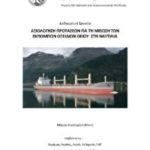
An NTUA Diploma Thesis titled “Impact of compliance for the reduction of sulphur oxide emissions in the shipping industry” was recently presented by Maria Konti. In order to achieve this, two case studies based on data taken from two existing bulk carriers were presented. The study indicates that options i) and iii) are accompanied by significant capital expenditures (CapEx), while the Scrubber option is shown to be the most cost-effective considering 5 and 10-year depreciation scenarios. Other important parameters such as the vessels’ age, the management companies’ cash flow and risk appetite, and the hire rates are shown to influence the results.
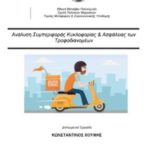
An NTUA Diploma Thesis titled “Analysis of traffic behaviour and road safety of delivery riders” was recently presented by Konstantinos Choumis. To achieve this, a questionnaire was developed, and 200 food delivery drivers from all over Attica were asked to respond based on the stated preference method for various hypothetical scenarios involving changes in delivery time, crash risk reduction and profit loss per delivery. The results of the multinomial logistic regression model revealed that the variables influencing the food delivery drivers’ choices in hypothetical scenarios include: delivery time, crash risk reduction, profit loss, age of the driver, the number of fines received, and their opinion on stricter penalties as a measure to improve road safety.
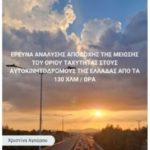
An NTUA Diploma Thesis titled “Survey on acceptance of speed limit reduction on Greek motorways” was recently presented by Christina Agourou. A stated preference survey was carried out examining three different scenarios of speed limits’ reduction on motorways. Multinomial and binary logistic regression models were developed and results demonstrated that drivers acceptance of speed limit reduction in motorways increases as the number of fatalities and serious injuries increases. It was also revealed that females are more willing to comply with lower speed limits than males.
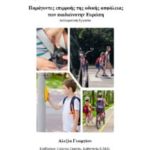
An NTUA Diploma Thesis titled “Impact factors of children’s road safety in Europe” was recently presented by Alexia Georgiou. For this purpose, data from the European CARE database on the number of victims aged 0-14 in road crashes and the characteristics of these crashes were used. Linear regression models and negative binomial regression models were developed. These models led to the conclusion that the percentage of drivers who develop speeds higher than the permitted ones in residential areas and the percentage of drivers who transport children over 150cm tall without a seat belt significantly affect the number of victims aged 0-14. Regarding crash characteristics, good weather conditions are associated with an increase in the number of victims.
An NTUA Diploma Thesis titled “Investigation of the impact of eco driving on fuel consumption using smartphone data” was recently presented by Aimilia Triantafyllou. To achieve this objective, data collected from 15 drivers who participated in a naturalistic driving experiment for a period of six months are analyzed. The results demonstrated that by improving the participants’ driving style, a remarkable reduction in fuel consumption was observed; and smoother and more ecological driver behavior was achieved.
An NTUA Diploma Thesis titled “Investigation of eco driving benefits at the rural network using driving simulator” was recently presented by Panagiota Kourenti. To achieve this objective, driving data from 39 participants were collected and the experimental procedure was carried out using a driving simulator. To complete the collection of the necessary data, the driving characteristics of the participants were collected through a questionnaire survey. The key conclusions of this thesis are that eco-driving reduces significantly emissions, fuel consumption and crash risk.
An NTUA Diploma Thesis titled “Comparative Evaluation of Road Safety Performance of the European Union Countries” was recently presented by Panagiotis Konstantopoulos. Key Performance Indicators (KPIs) for road safety were exploited as collected in 2021-2022 within the Baseline project, together with data from Eurostat and EC CARE road crash databases. It was observed that an increase in the percentage of vehicles travelling within the speed limits on urban roads and of the percentage of seat belt use, as well as an increase in the proportion of new vehicles in the total fleet, are associated with a clear reduction in crash severity.
An NTUA Diploma Thesis titled “Comparative analysis of road safety performance in the Regions of Greece” was recently presented by Lydia Papagianni. For this purpose, Key Performance Indicators (KPIs) for road safety in Greece were collected and calculated for the year 2022 as part of the European Union’s Baseline project. It was found that as the KPI for the use of protective equipment, distraction from handheld devices, compliance with speed limits, the per capita GDP, and the number of hospital beds increase, the number of road fatalities per population decreases. Conversely, as the employment rate increases, the road fatalities also increase.
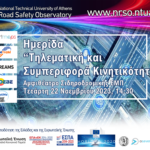
The NTUA Department of Transportation Planning and Engineering organised with great success a Scientific Workshop titled “Telematics boosting mobility behaviour” which took place at the NTUA Campus in Athens on November 22nd, 2023. The rapid spread of innovative technologies in the field of telematics creates new opportunities to monitor, evaluate and improve driver behaviour through feedback tools, providing incentives to drivers for safer and greener behaviour, with spectacular results. During this workshop, the new interactive SafeRoadsMap tool for safe and green travelling in Greece was released.  Workshop Presentations:
Workshop Presentations:
- Telematics and mobility behaviour – nrso
- OSeven application and improvement of mobility behaviour – SmartMaps
- Collection and processing of smart map data – SmartMaps
- Development of infrastructure, driving behaviour and fuel consumption maps – SmartMaps
- Development of algorithms for multiparametric analysis of driving behaviour and road segment risk– SmartMaps
- Fleet, traffic and mobility management in interconnected environments – Dit4tram
- Driver-vehicle-environment interaction and comparison by transport mode – iDreams
- Safety assessment of Athens Great Walk segments with telematics data – PHOEBE
- Artificial intelligence and safe mobility – Ivory
- Driver behaviour optimisation for safe, green and energy efficient mobility – OptiMo

The European Conference of Transport Research Institutes (ECTRI) celebrated the 20 Years of Achievements in Sustainable and Multimodal Mobility Research, in conjunction with the Annual Plenary Meetings of Members and of Thematic Groups, which took place with great success in Brussels, on 16 November 2023. Key achievements were highlighted and discussions focussed on how can research drive future green and inclusive mobility and the transformative impact of research on transport policy. NTUA actively contributed with the following presentations:

The World Day of Remembrance for Road Traffic Victims is observed on the third Sunday of November each year, launched in 1995 by the European Federation of Road Traffic Victims (FEVR) and since 2005 adopted by the United Nations and is dedicated to remembering the many millions killed or injured in road crashes and their families and communities, as well as to pay tribute to the dedicated emergency crews, police and medical professionals who daily deal with the traumatic aftermath of road death and injury. A book written by Jeannot Mersch and Briggite Chaudhry has been published for celebrating 30 years for the Day of Remembrance. 
The SWOV – Dutch Road Safety Research Institute organised with great success the 11th International Cycling Safety Conference (ICSC2023) which took place in Hague, on 15–17 November 2023, bringing the conference back to the Netherlands after 10 years. The ICSC is a forum for researchers and experts in the field of cycling safety to exchange their knowledge and bring up new research topics and safety solutions. This year’s conference focused on safer cycling for a better future. NTUA actively contributed with the following paper:
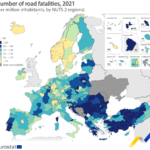
Based on the new interactive map of EUROSTAT on road safety performance of European Union regions (NUTS 2), there were 19,917 road fatalities on EU roads in 2021, equivalent to 45 road fatalities per million inhabitants. In total, there were 24 EU regions with at least 80 road fatalities per million inhabitants and the highest incidence rates for road fatalities were recorded in rural regions. In urban and capital regions much lower rates of road fatalities are reported with the lowest incidence rates observed in Brussels,Belgium (7 fatalities per million inhabitants), Wien, Austria (8), Stockholm, Sweden (9), and Bremen, Germany (9). 
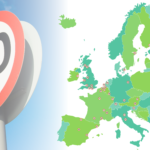
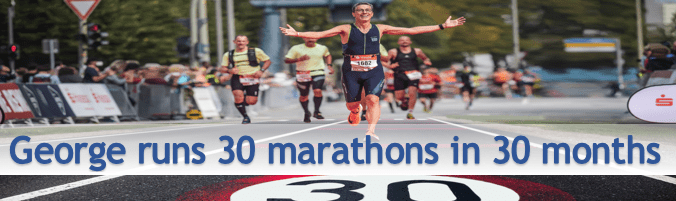
Several cities worldwide have started setting speed limits of 30 km/h in large parts of the city. Brussels, Paris and Vienna have introduced city-wide 30km/h speed limits, mixing safely traffic of pedestrians, cyclists and motorised vehicles, with significant results in reducing road crashes, emissions and noise and upgrading city liveability. Within the 30 Marathons in 30 months campaign-challenge of Prof. George Yannis, a comprehensive set of resources on cities experiences with 30km/h speed limit is made available: georgeruns30x30.com/resources

The NRSO campaign for the promotion of city-wide 30km/h speed limit in all cities by running 30 Marathons in 30 months by Prof. George Yannis has received wide publicity in the tv, the radio, newspapers, magazines and the social media, as well as in scientific journals, conferences and workshops, with the active support of the NTUA and several International Organisations (ETSC, ECTRI, UITP, POLIS, ERF, IRF, FERSI, FEHRL, ECF, WALK21). This campaign has a particularly significant social impact, as depicted by international findings, demonstrating an average 37% reduction in fatalities in road crashes in cities which have adopted the 30km/h speed limit, together with significant environmental, energy and health benefits. All these media interventions are available at: https://georgeruns30x30.com/media
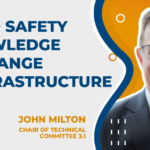
The World Road Association – PIARC implemented an ambitious PIARC Knowledge Exchange project, aiming at sharing knowledge about road safety, with the active contribution of NTUA and AIT, especially within Low and Middle Income Countries with limited resources but also in more developed economies with different needs and priorities. The theme of this month refers to infrastructure, as presented by the chair of PIARC Technical Committee 3.1 John Milton. Throughout the year, PIARC focuses on the Safe System approach, addressing safe roads and roadsides, safe road users, safe vehicles and safe speeds.

The Network of Regional Road Safety Observatories (RSO), namely the European (ERSO), Ibero American (OISEVI), African (ARSO), Asia and Pacific (APRSO), the Easter Parnership (EaPRSO) and Arab (AIRSO), organised with great success an informal meeting which was held in Paris and online, on 9 November 2023. The main topic discussed was the update on programme of Work and activities of Regional Road Safety Observatories. NTUA actively contributed with the following presentation:
A new book titled “La Vitesse: Enjeux contemporains et politiques publiques” authored by Laurent Carnis and Dominique Mignot, was recently published. Speed is at the heart of society as it continues to structure everyday behavior, expressing a form of modernity and reflecting the relationship with time and risk. Furthermore, speed is also a matter of public policy, with road safety and public health at stake, along the interactions between behavior, vehicles and infrastructure. These policies must ensure that the measures taken are acceptable and effective on the ground, requiring though strong commitments by decision-makers.
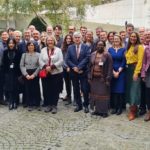
The International Road Traffic Safety Analysis and Data (IRTAD) Group and of the International Transport Forum (ITF) organised with great success the 36th Meeting which was held in Paris and online, on 8-9 November 2023. In this conference, the latest international road safety developments were discussed. 45 road safety experts enriched the discussion aimed to help improve road safety across the globe. Particular emphasis was given to new mobility and the evaluation of road safety measures. NTUA actively contributed with the following presentations:
Τhe European Transport Safety Council (ETSC) has recently published the 45th PIN Flash Report titled “Reducing Older People’s Deaths on European Roads”. This report highlights road safety challenges faced by older road users examines the latest data regarding road deaths of older people across the EU and other countries that form part of ETSC’s Road Safety Performance Index (PIN) programme. Key measures aimed at reducing risks for older road users, encompassing strategies that address behaviour, infrastructure and vehicle safety, are provided. Remarkable is that 55% of older people road deaths are vulnerable road users, while one third of them are pedestrians.

The Hellenic Sleep Society organized with great success the 13th Panhellenic Congress on Sleep Medicine in Athens, on 3-5 November 2023. The aim of this conference was to investigate the effects of insomnia on an individual’s health, but also on driving performance. Through a driving simulator experiment, it was observed that patients with chronic insomnia drive at a higher speed than participants without insomnia, have a reduced ability to maintain a stable lateral position of their vehicle, and their reaction time to most events appears to be slower than participants without insomnia. NTUA actively contributed with the following poster:
NTUA actively contributed with the following poster: